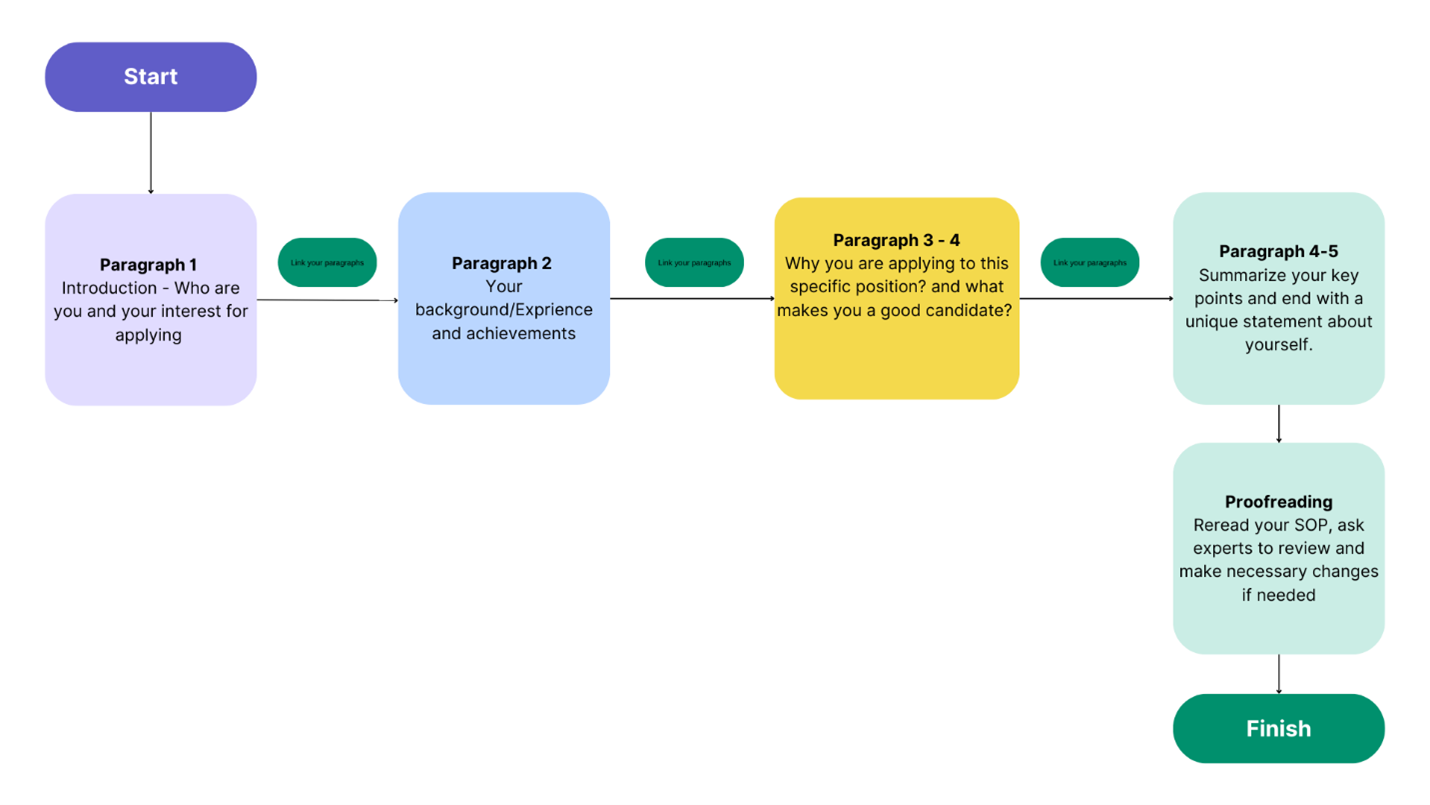
How to Write a Powerful Statement of Purpose (SOP) in 5 Steps Using AI?
A Statement of Purpose (SOP) is one of the most important parts of your university application. It is your chance to go beyond grades and test scores and show your story, motivation, and academic direction.
With AI tools, writing an SOP has become easier—but the key is using AI to structure, refine, and improve your ideas, not replace your personal voice.
🎯 Step 1: Define Your Purpose
Before writing anything, clearly define:
The program you are applying to
Your academic field of interest
Your long-term career goal
💡 AI Help:
Use ChatGPT to brainstorm ideas like:
“Help me define my academic goals for a PhD in ___”
👉 This step gives direction to your SOP.
🎓 Step 2: Gather Your Academic Story
Collect and organize your background:
Degrees and coursework
Research experience or thesis work
Teaching or professional experience
Skills and achievements
💡 AI Help:
Organize experiences
Identify relevant content
Remove unnecessary details
🔬 Step 3: Define Your Research Interests
Clearly explain what you want to study:
Specific research topics
Problems you are interested in solving
Past experiences shaping your interest
Faculty or labs you want to work with
💡 AI Prompt:
“Based on my background, suggest research interests for my SOP”
🏫 Step 4: Why This Program?
Explain why this university is the right fit:
Courses and curriculum
Faculty expertise
Research facilities
Academic environment
💡 AI Help:
Compare universities
Personalize SOP for each program
🚀 Step 5: Career Goals
End with a strong and clear vision:
Short-term goals (PhD, research training)
Long-term goals (academic or industry career)
How this program connects to your goals
💡 AI Prompt:
“Improve my career goals section for a PhD SOP”
🧠 AI Tools That Help You Write SOPs
ChatGPT → structure, brainstorming, rewriting
Grammarly → grammar and tone improvement
QuillBot → sentence rewriting
Notion → organize drafts and ideas
⭐ Final Tip
A strong SOP is not about big words—it is about:
Clarity
Structure
Authenticity
Direction
Use AI as a support tool, not a replacement for your voice.